
Aerial Yoga –
Somatic Pathways
Two complementary courses for personal practice and Continuing Professional Development*

*Requires a double-point nylon hammock and secure rigging
Somatic Foundation Course
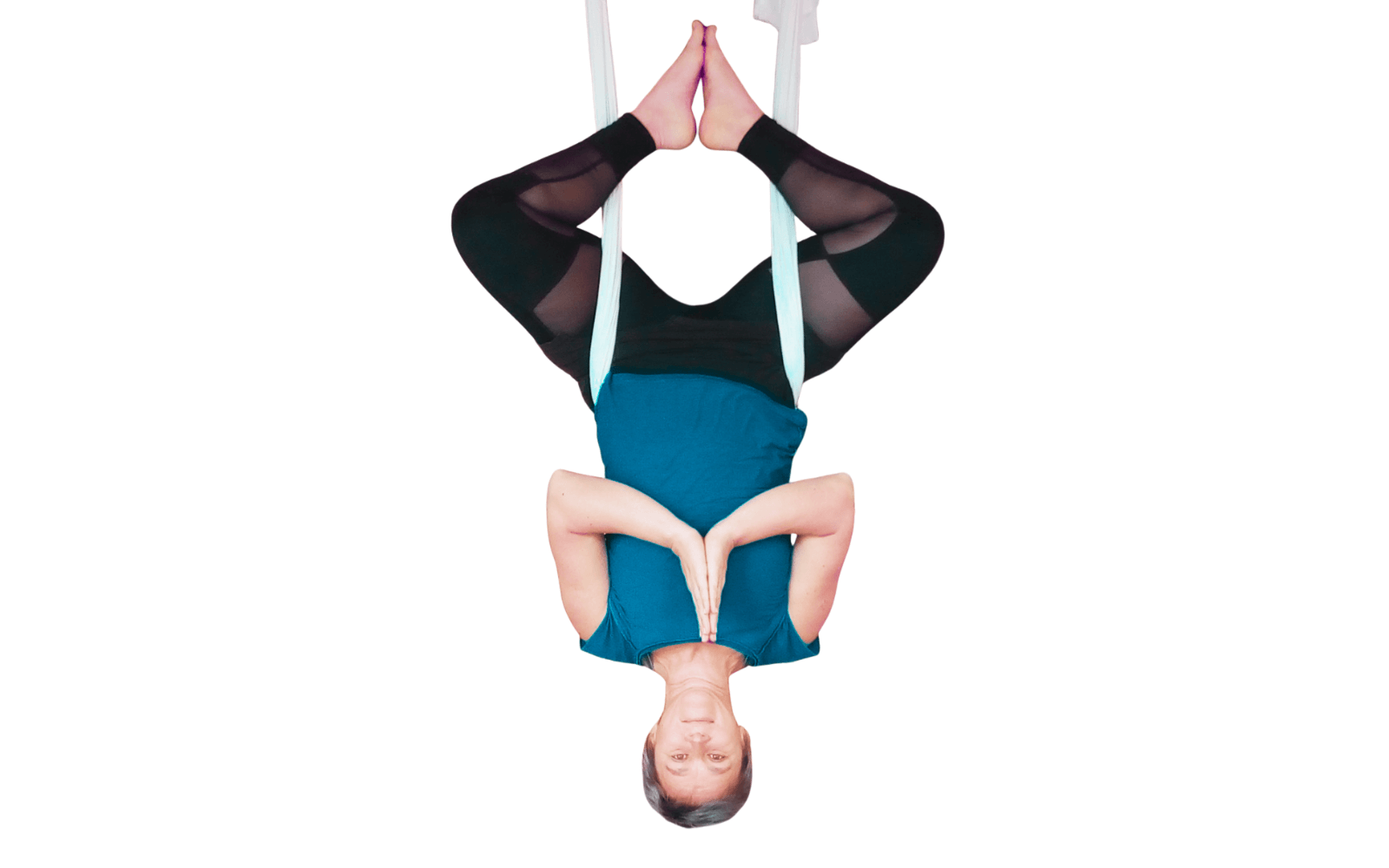
Aerial Yoga Somatic Foundations offers a structured, somatic approach to exploring yoga with a hammock. Through progressive modules, you’ll explore foundational supports, wraps, and sequences that build understanding rather than reliance on memorised shapes.
The emphasis is on learning how the hammock supports the body, how movement can be organised with choice and ease, and how these principles translate into both personal practice and teaching contexts.
How the course is presented
The course includes over 7 hours of video, organised into nine core modules, each exploring sequences oriented around the placement of the hammock, including standing, kneeling, lying in and resting on the fabric. The modules build on one another, allowing understanding to deepen gradually rather than rushing toward outcomes.
You’ll explore:
● Wrist Wrap; Basic Hold; Resting Prayer – includes Cat, Cow, Cobra, Camel and Half Dog
● Rib support movements including chair and plank
● Hip hang (Down Dog variations)
● Pelvis wrap & inversions – including Pigeon variations
● Thigh support — leg sequences
● Back ankle and Front ankle support — leg sequences and floor work
● Whole foot support — standing in the fabric
● Inside-the-hammock sequences — lying fully supported, resting, integrating, and sensing from within
Alongside the modules, you’ll find:
● Sample classes (45–60 minutes)
● A dedicated section on teaching skills and somatic principles, relevant whether you’re working with others or refining your own discernment and clarity in practice
How to work with the material
This course is designed to be taken slowly and sequentially.
You’re invited to:
● watch each sequence in full before practising
● work through one module at a time
● allow the principles to land before moving on to the sample classes
This supports a deeper, more embodied understanding, one that doesn’t rely on memorisation, performance, or external validation.
All content is available with lifetime access, so you can return to the material as your relationship with the hammock evolves.
Who is this course for?
This course is well suited to:
❖ Experienced yoga teachers wishing to extend their scope into aerial yoga
❖ Movement teachers curious about somatic, principle-based aerial work
❖ Personal practitioners using a hammock at home
❖ Complete beginners who want to learn how to use a hammock clearly and safely, rather than guessing or copying
This course is not a certification or qualification. Neither is it a fast-paced follow-along workout with flips-and-tricks nor a performance-based aerial course. The emphasis is on understanding, relationship, and choice, not spectacle.
Practical Requirements
◼︎ Can be used with a ceiling rig or a large aerial yoga frame
◼︎ Ceiling height: Min 8 ft; Max : 15 ft
◼︎ Designed for a double-point nylon hammock (not hammocks with handles), could be adapted to a single-point setup
Short instructional videos are included covering:
◼︎ how to tie a hammock
◼︎ how to rig and set the correct height
Course Details - Summary
►Welcome – 🎦 2:28
Overview
FAQs
Equipment details
Hanging the hammock – 🎦 4:06
Tying the hammock – 🎦 3:36
Setting hammock height – 🎦 2:07
Hammock holds – 🎦 1:48
►Single Wrist Wrap, Basic Hold, Resting Prayer 🎦 33.45
* Kneeling Flow
* C’ Flow
* Warm Up Flow
* Standing Flow
* Lifting Flow
►Rib Support 🎦 27:23
* Wake Up Flow (+ additions)
* Core Circles
* Side Flow
► Hip Hang 🎦 19:49
* Hip Hang
* Downward Facing Dog
* Flying Locust
►Pelvis Wrap 🎦 28:08
* Inverted Bound Angle
* Single Leg Extension
* Double Leg Extension
* Inverted King Pigeon
* Rotated Bound Angle
►Thigh Support 🎦 11:54
* Warrior Flow A
* Warrior Flow B
►Back Ankle Support 🎦 34:28
* Standing Forward Fold
* Standing Side Bend
* Standing Twist
* Suspended Bridge
►Front Ankle Support 🎦 20:33
* Dancer Flow
* Plank Flow
* Cat/Cow and Child’s Pose
► Whole Foot Support 🎦 17:16
* Tree Flow
* Floating Bound Angle
► Sitting in the Hammock 🎦 46:25
* Sitting in the Hammock
* Supported Bound Angle – cocoon
* Supported Bound Angle – variation
* Floating Forward Fold
* Floating Plough
* Forward Roll Into The Hammock
* Supported Inversion – Full Seat Wrap
* Wheel Flow
* Deep rest
► Assisting inversions 🎦 4:15
► Sample Class 1 🎦 50:41
► Sample Class 2 🎦 41:46
► Sample Class 3 🎦 1:05:13
► Principles and teaching skills 🎦 23:12
Somatic Lo Flo Course
A low-hammock practice for slowing down, integrating, and deepening awareness
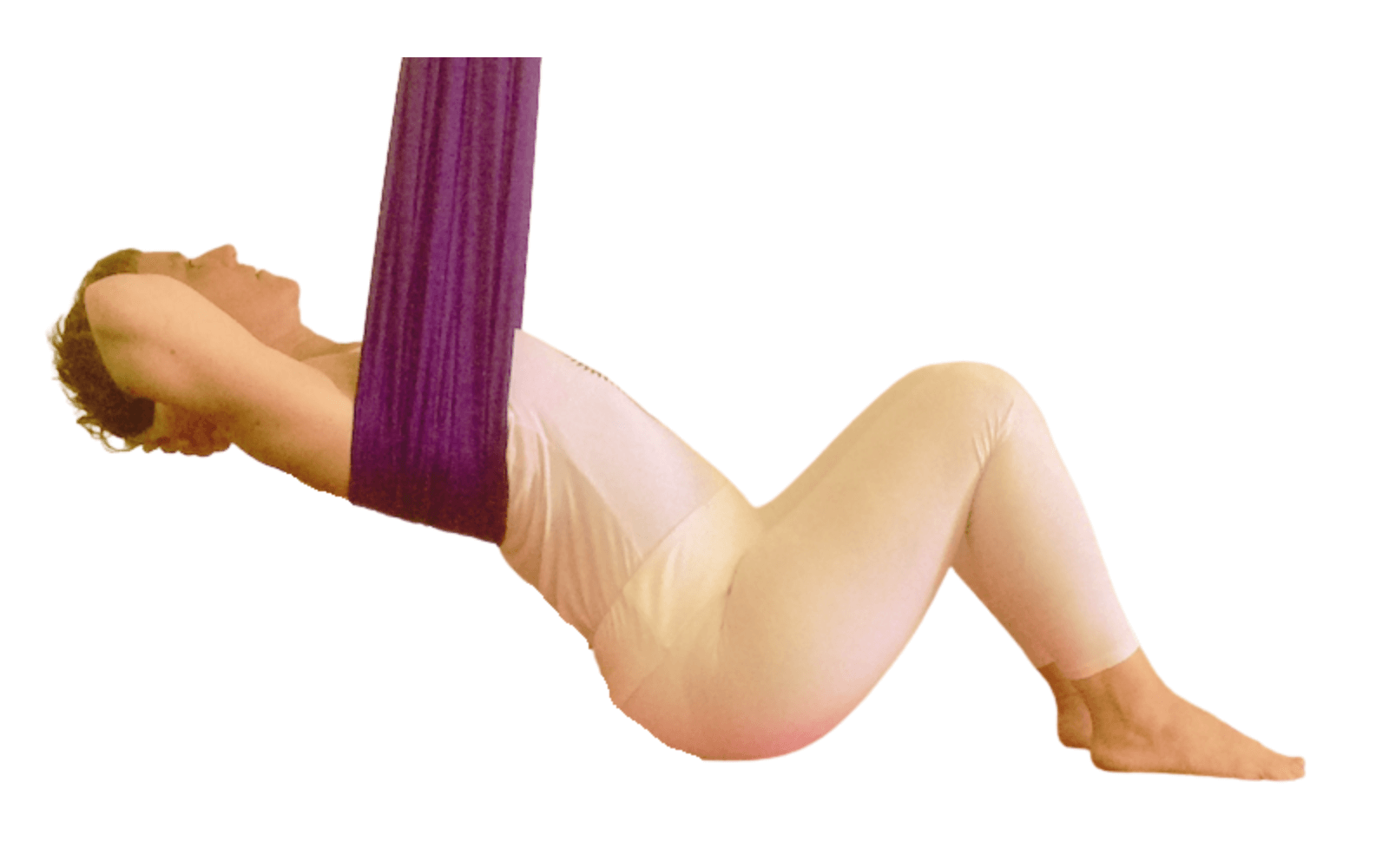
Somatic Lo Flo is an exploration of postures and sequences with the hammock hanging just inches above the floor. Working close to the ground allows the practice to feel both supported and spacious, combining somatic movement with elements of restorative yoga, yin yoga, and somatic meditation.
Movement is slow and unhurried. Sequences flow gently in and out of one another, often guided by breath to support both engagement and release. The hammock becomes a versatile companion: a place to sit inside, to rest onto, to fold over, to support a single area of the body, to assist inversions, and even to stand on, all while staying close to the floor.
Rather than pushing range or shape, the emphasis is on sensing, and allowing function to improve organically. Strength, flexibility, balance, coordination, trust, and confidence emerge as by-products of awareness, and, importantly, the practice remains playful and enjoyable.
Experiencing Lo Flo
Through slow, supported movement and low-hammock exploration, you are guided in to:
● Sensory awareness: a clearer felt sense of your body
● Gentle decompression of joints and a sense of space through your spine
● Release of habitual holding, allowing energy to move more freely
● A growing sense of trust, confidence, and internal support
● Movement that feels easeful, coordinated, and responsive
● A quiet sense of wholeness and well-being that extends beyond the practice
These experiences emerge gradually, through attention and repetition, rather than effort or force.
Course Presentation
7 modules, containing short instructional videos that can be revisited over time; exploring movements in the hammock depending on where the hammock is placed.
You’ll cover:
◼︎ Wrist wraps and holds, with warm-up sequences
◼︎ Rib support movements
◼︎ Hip balance explorations
◼︎ Pelvis wraps and supported inversions
◼︎ Ankle and whole leg support sequences
◼︎ Bound angle and tree variations
◼︎ Extensive inside-the-hammock material, including resting and integration
◼︎3 live sample classes

Who is this course for?
❖ Yoga and movement teachers seeking gentle, somatic aerial practices
❖ Personal practitioners wanting a deeply supportive practice
❖ Those drawn to slower movement, rest, and a nervous-system-aware approach
❖ Anyone curious about using a hammock without the emphasis on performance or intensity
This course is offered as Continuing Professional Development and personal study. There is no assessment or certification. The emphasis is on embodied learning, personal inquiry, and developing discernment – for yourself and, if relevant, for those you guide.
Practical Requirements
★ The same rigging and hammock setup as the Foundations course
★ Hammock hung low to the ground (so ceiling height is not as important)
★ Suitable for ceiling rigs or large aerial frames
★ Double-point nylon hammock (not hammocks with handles)
★ Could be adapted for single-point setups
Course Details - Summary
►Welcome
Overview
Equipment
FAQs
Hanging the hammock – 🎦 4:06
Tying the hammock – 🎦 3:36
Setting hammock height – 🎦 0:42
Hammock holds – 🎦 0:52
►Wrist Wraps and Holds
*Kneeling Flow 🎦 14:36
*Seated Side Bends and Twists 🎦 11:48
*Seated Twist Arch and Curl 🎦 1:45
*‘C’ Flow (camel and cobra) 🎦 5:03
*Hip Flexor Flow 🎦 11:42
*Cat Balance and Down Dog 🎦 7:48
►Rib Support 🎦 5:27
►Hip Balance 🎦 7:40
►Pelvis Wrap 🎦 12:54
►Leg Sequences
* Hamstring Release 🎦 8:01
* Invert/Evert 🎦 17:36
* Seated Side Bend 🎦 1:59
* Seated Twist 🎦 4:45
* Supported Pigeon (whole leg) 🎦 5:25
* Propeller 🎦 8:39
* Flower 🎦 6:05
* Reclining Twist 🎦 4:33
* Supported Pigeon (ankle) 🎦 4:09
►Balance
* Tree Flow 🎦 8:40
* Floating Bound Angle 🎦 9:10
► Sitting in the Hammock
* Cocoon 🎦 2:58
* Seated Twist Pigeon 🎦 3:27
* Floating Bound Angle variation 🎦 2:50
* Supported Plough 🎦 2:42
* Supported Bridge 🎦 3:24
* Floating Savasana
► Sample Class 1 🎦 1:07:16
► Sample Class 2 🎦 1:20:46
► Sample Class 3 🎦 1:12:57
► Practicalities of teaching 🎦 35:54
► Principles and teaching skills 🎦 23:12
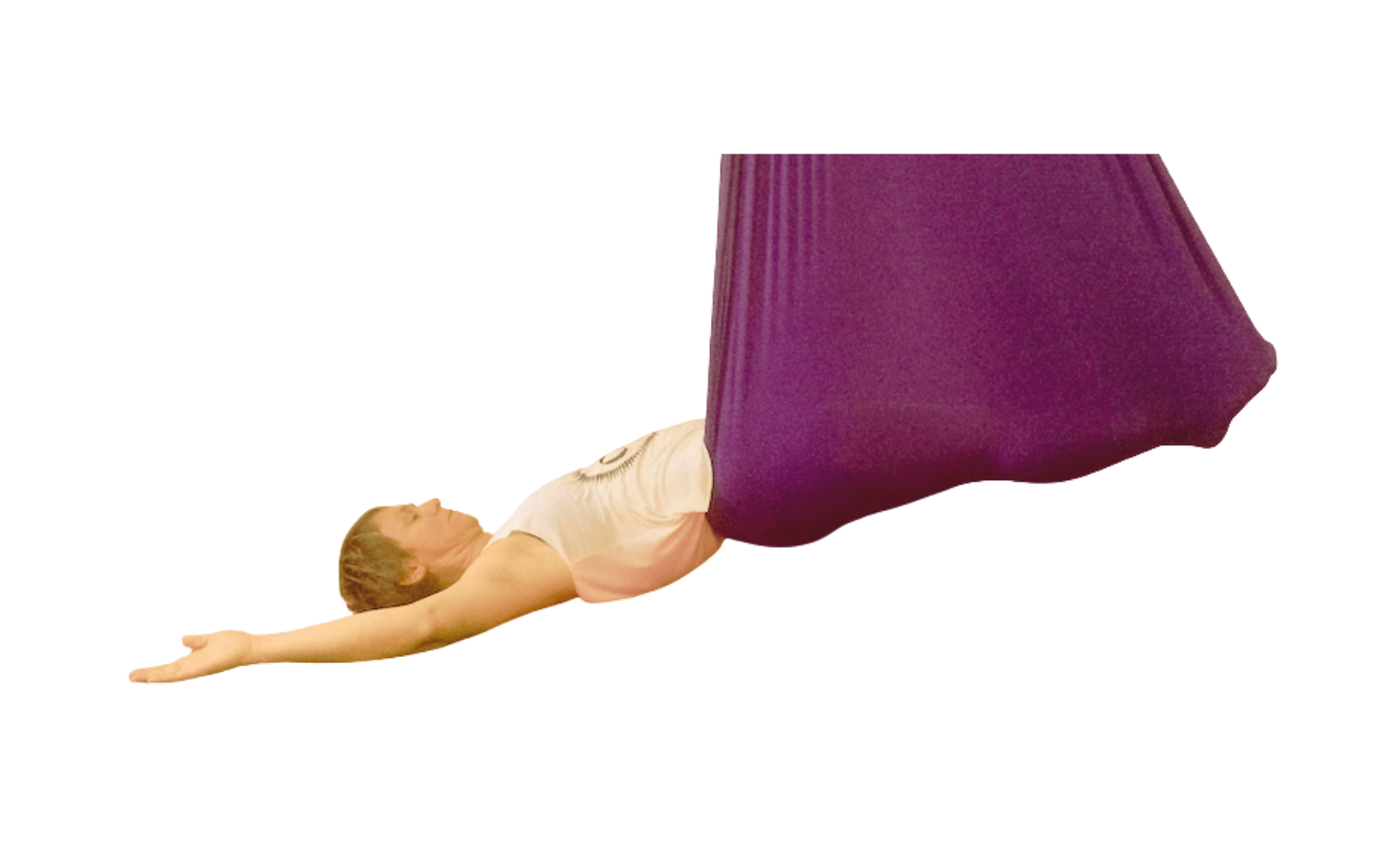
Two Pathways
One Practice
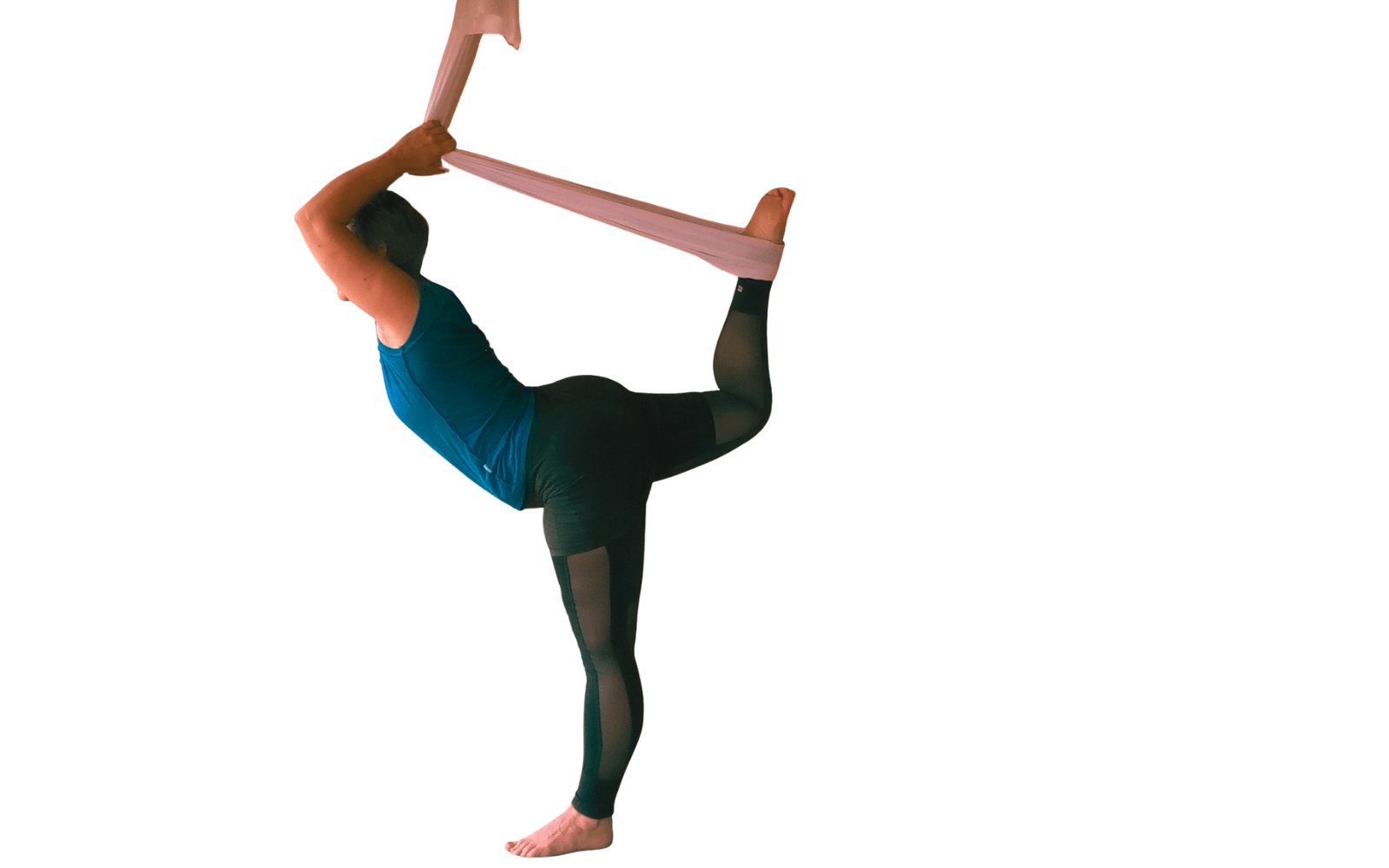
Both courses are designed to work beautifully together.
While each course can be taken on its own, most people choose to explore both in order to experience aerial yoga as a complete, living practice; one that includes clarity and structure as well as softness, rest, and integration.
✸ Aerial Yoga Somatic Foundations offers the building blocks: clear ways of working with the hammock, understanding support, and developing confidence across a range of applications.
✸ Somatic Lo Flo brings us closer to the ground, slowing down, deepening sensations, and integrating through low-hammock work.
Together, they support:
✸ technical understanding and embodied listening
✸ active exploration and restorative nourishment
✸ confidence in structure and freedom in expression
If you’re drawn to aerial yoga as a long-term practice, whether for yourself or as part of your teaching, the bundle of both courses offers a wide, and varied landscape to explore.
Purchase both courses together and receive a reduced price, reflecting their shared foundations and complementary nature.
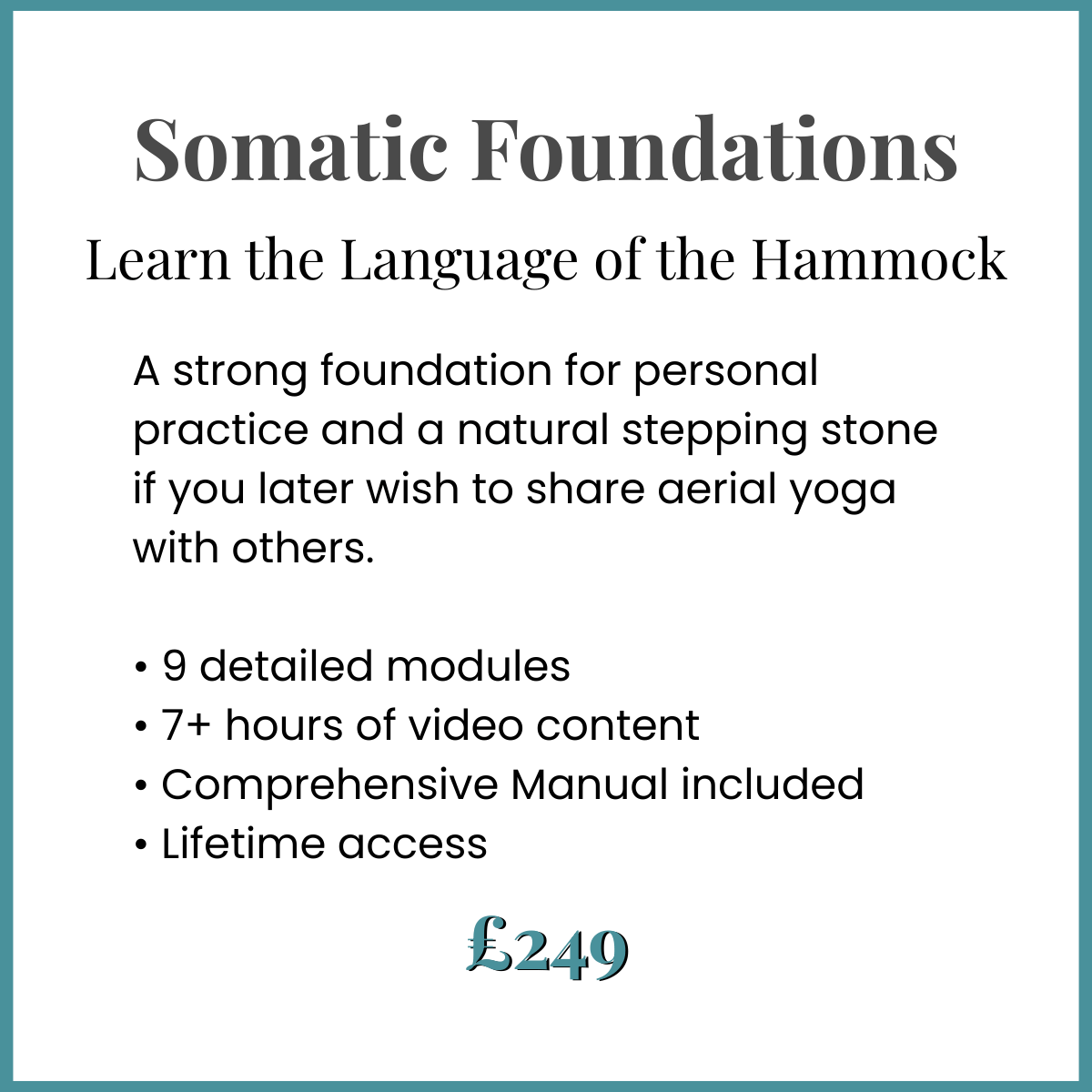
*£249 paid in full or
3 x £85 monthly instalments
Lifetime access ● Secure Checkout
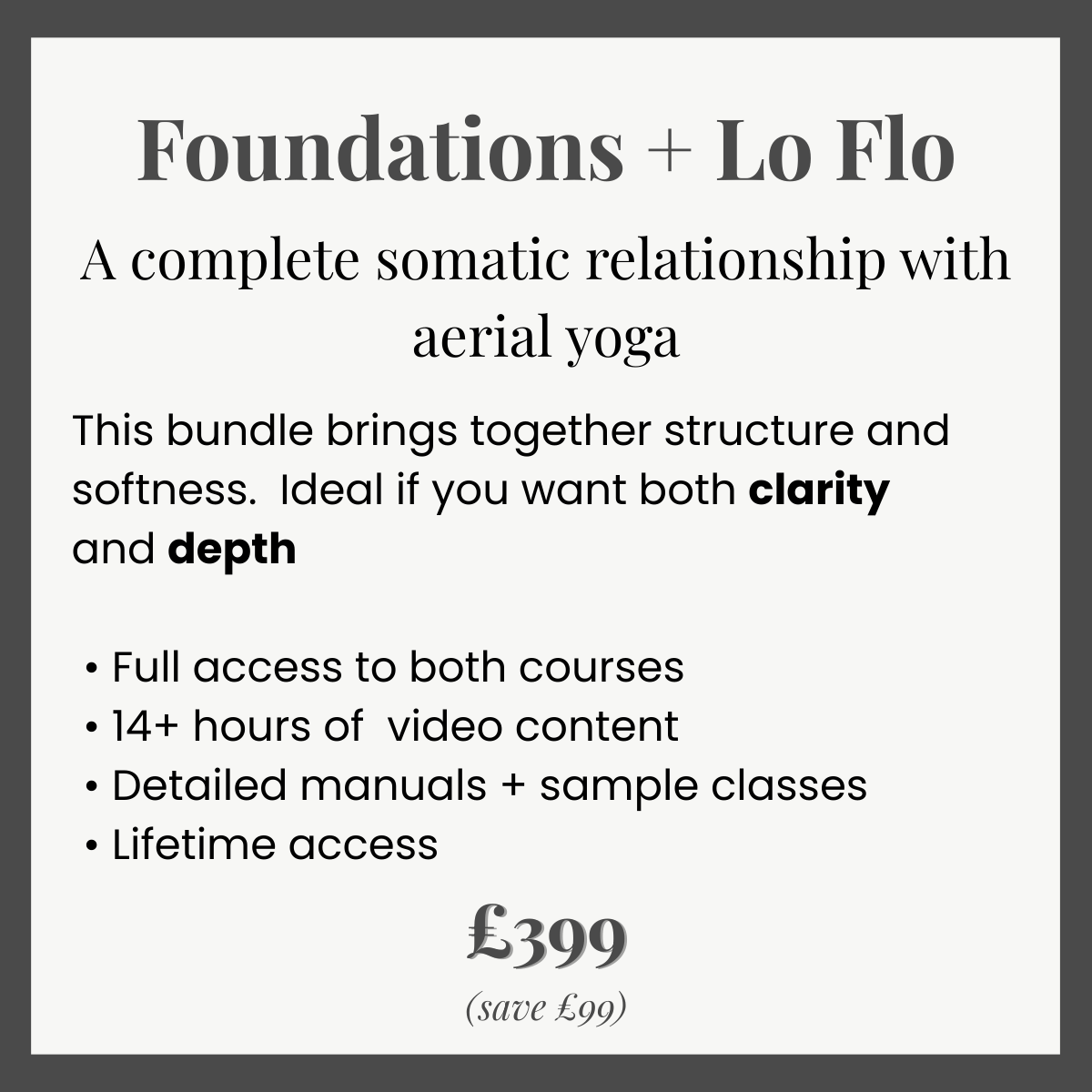
* £399 paid in full or
4 x £100 monthly instalments
Lifetime access ● Secure Checkout
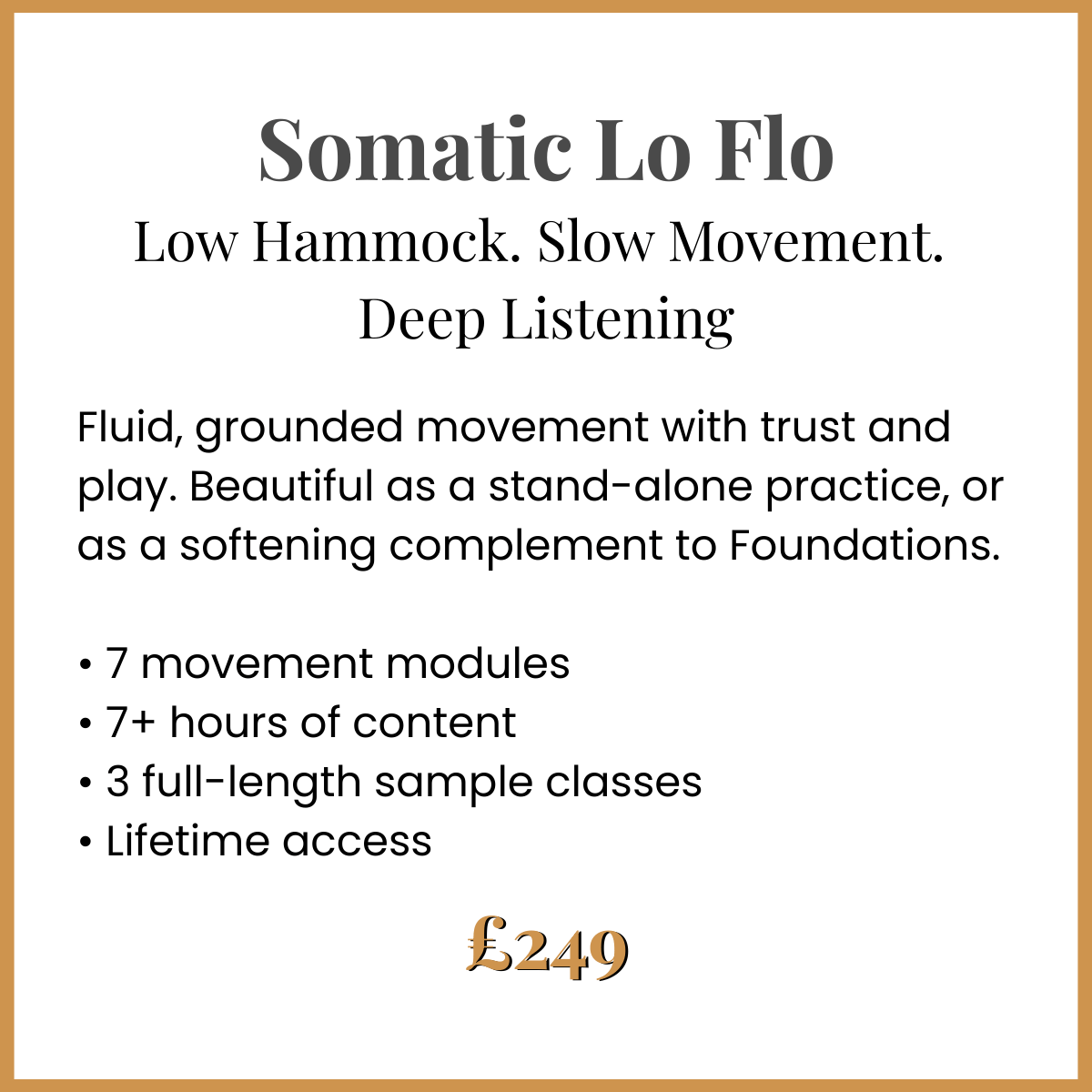
*£249 paid in full or
3 x £85 monthly instalments
Lifetime access ● Secure Checkout
*Pay in full or choose a payment plan that suits you.
If you pay in full, you can also use Afterpay, Klarna, or Affirm to spread your payments—while we receive the full amount upfront.
I have grown in confidence and I’m ready to take my first baby steps as an Aerial yoga teacher, I can’t wait to share these skills with as many people as I can. I found myself on a great journey of self-discovery, and although I resisted at first, the training was an absolute tonic and helped me immensely on a personal level.
Amanda you were nothing short of kind, patient and caring with us. From the beginning you made sure we were comfortable and confident and that we didn’t necessarily feel like beginners. You made things easy and … as time went on and I grew more confident in my aerial yoga capabilities, you gave the opportunities for more ‘fun’ in the class, teaching us new challenging poses and alternative ways of doing things as shown previously. You made Yoga (which I’d previously been horrendous at) accessible.
Meet the Teacher
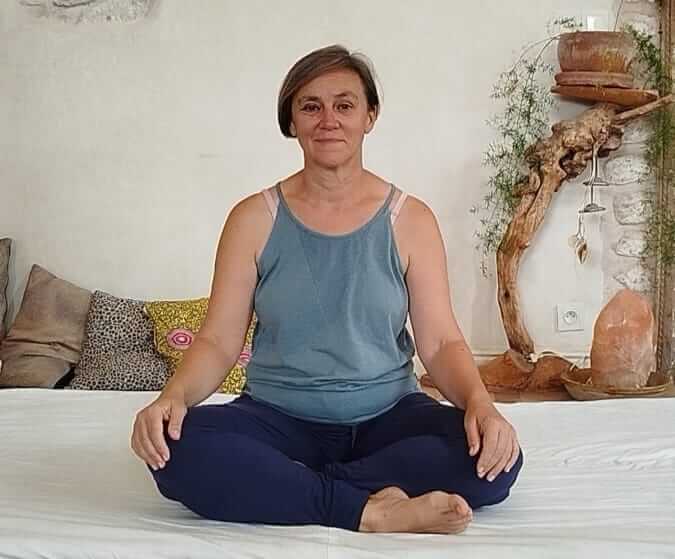
Amanda has over 25 years of teaching experience, guiding individuals on their journeys of self-discovery and growth since 1997.
“My background is diverse, including 11 years of teaching and practicing Raja Yoga meditation, which has deepened my understanding of mindfulness and inner peace. I spent 8 years as a secondary school teacher, navigating stressful environments and overwhelming workloads—experiences that have shaped my empathetic approach to teaching. Since 2007, I have been sharing the transformative power of movement through somatic practices, including dance, aerial yoga, and somatics. My passion lies in demystifying what may seem complex or ineffable, making it both understandable and reachable for everyone. Guided by my main mantra, “no right way,” I create an inviting and inclusive environment where exploration and self-expression are encouraged. I believe that life can be enjoyable, fun, easy, exciting, and magical when we slow down and recognise its gifts.
Got Questions?
What equipment do I need?
You’ll need:
– A double-point nylon aerial hammock (not one with handles – we recommend https://www.firetoys.co.uk/)
– A secure rigging point or a large freestanding yoga frame
The courses include video tutorials on rigging, knotting, and setting appropriate heights.
Single-point setups can be adapted, though demonstrations are shown using double-point rigging.
We suggest a minimum ceiling height of 8ft / 2.4m and a maximum height of 15ft / 4.5m for the Foundations course.
Is this a teacher training?
These courses were originally created for teachers, and the depth of that material remains.
They are now offered as experiential learning for personal practice and professional development, without assessment or certification. Many people take them purely for themselves; others later choose to share what they’ve learned in their own way.
Will I receive a certificate?
No. These courses are not assessed and do not issue certificates or qualifications.
The emphasis is on lived understanding rather than external validation. What matters most is what unfolds in your body, awareness, and relationship with the hammock over time.
Do I need prior yoga or aerial experience?
No prior experience is required.
Some people arrive with years of yoga or movement behind them, others are meeting the hammock for the first time. The material is offered in a way that allows understanding to grow through exploration, listening, and repetition, rather than prior knowledge.
Is this a follow-along class series?
No.
This is not a sequence-based or “do-as-I-do” course. You’ll be guided to explore principles, supports, and relationships with the hammock so that movement can arise with choice, responsiveness, and ease. Each course does include sample classes that you can follow along and get a sense of how classes can be put together from the material provided.
What is the difference between Somatic Foundations and Somatic Lo Flo?
Somatic Foundations explores the hammock at full height, offering a broad landscape of supports, wraps, and applications that can be adapted in many ways.
Somatic Lo Flo works with the hammock close to the floor, weaving somatic movement with restorative, yin, and meditative qualities. The emphasis is slower, closer to the ground, and deeply sensory.
They stand alone, and they also complement each other beautifully.
Can I take Lo Flo without taking Foundations?
Yes.
While the courses share principles, each one is complete in itself. Some people start with Lo Flo because of its proximity to the ground; others enjoy beginning with Foundations. You’re free to choose the entry point that feels most supportive.
Is this suitable for home practice?
Yes, provided you have appropriate space and rigging.
Both courses require a double-point nylon hammock (without handles) and sufficient ceiling height. The hammock can be ceiling-rigged or used with a suitable frame, and adaptations are discussed.
Both courses were actually filmed in a home environment, rather than from the studios we taught from.
How long do I have access to the material?
You’ll have lifetime access.
This allows the learning to return in cycles, rather than needing to be completed or “finished” in a particular timeframe. You’ll most probably play each video a few times as you navigate the movement and the sequences.
Can this support my existing teaching or movement work?
Many people find that it does.
The principles explored often ripple into yoga, dance, somatics, and other movement contexts — not necessarily as techniques to apply, but as ways of listening, organising movement, and working with support.
What if my body has injuries or limitations?
At Radiant Star Yoga, we are great believers in giving the responsibility to the student, when it comes to making decisions about what people can and can’t do. However, to make an informed decision one needs to be aware that some ‘conditions’ might make it highly advisable NOT to partake in Aerial Yoga. If this arises, we suggest the individual gets advice from their doctor/qualified health practitioner.
The following health issues are some that indicate Aerial Yoga would not be suitable:
• Glaucoma
• High or Low Blood Pressure
• Heart/circulatory conditions
• Neck/spinal injuries
• Recent Surgery
• Osteoporosis/bone weakness
• Recent concussion/head injury
• Cerebral sclerosis
• Severe arthritis
• Artificial/resurfaced hips
• Hiatal hernia
• Disc herniation
• Recent Stroke
• Recent botox
• Inner ear problems
• Pregnancy, or recent birth (6 months)
There may be other ‘labels’ and diagnoses that people may present with/ask about. The above are more obvious conditions. Always ask for a health practitioners approval if you are in doubt.
Do I need a lot of strength or flexibility?
No.
Strength, flexibility, balance, and coordination develop naturally as you progress through the material.
You’re encouraged to work within your own range, take breaks, and prioritise ease and sensation over achievement.
What happens once I click the button to buy?
You’ll be taken to a new window where you’ll provide your payment details and then you’ll be added to our online platform (Thrivecart). You’ll automatically be sent an email with all the information you need to log in to the course. And all the material will be available immediately. So you can begin straight away!
Can I pay in instalments?
Yes you can! And there’s a few ways you can do this.
We have provided 3 instalments for each individual course, or 4 instalments if you buy both courses together.
However, if you choose the pay in full option, there are also ways that you can spread your payments whilst we receive the full amount upfront (Afterpay, Klarna and Affirm offer this in the payment window).
You can always contact us directly if you want to discuss other options
info@radiantstaryoga.com
You don't have my question here
Pleasse feel free to get in touch with us directly to ask us your question. We are real people at the end of the email!
info@radiantstaryoga.com