
Developmental Movement
how movement begins, unfolds and becomes
what is developmental movement?
We all began moving long before we knew the names of movements or had ideas about how they should be done. We rolled, reached, shifted our weight, found ways across the floor and, eventually, found ourselves standing and walking.
In these classes, we return to some of that territory – not to recreate the way a baby moves, but as a starting point for exploring how you move now.
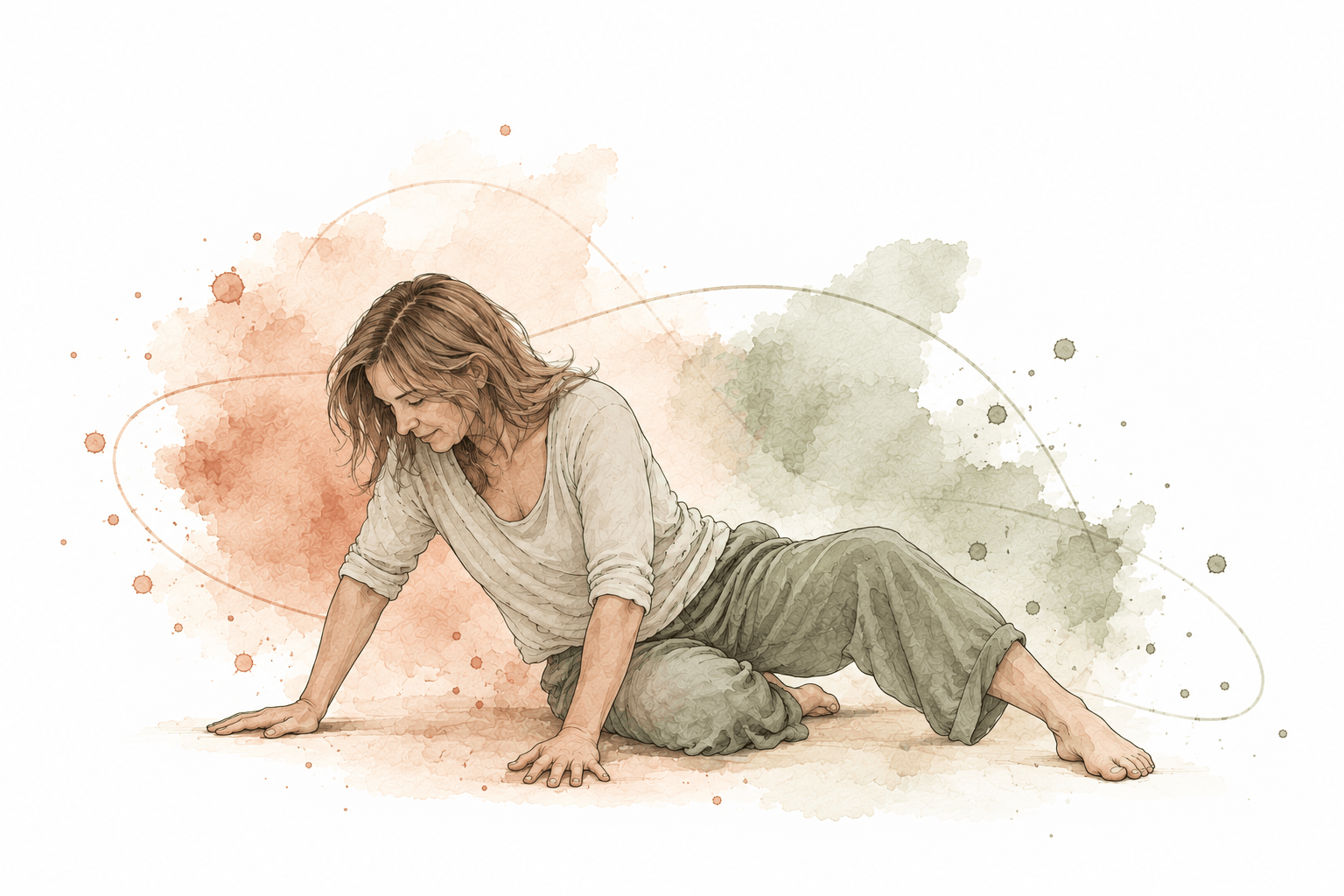
Whilst we play with rolling, crawling, squatting and walking, we don’t treat them as particular movements to master. Instead, we’re interested in what happens within and between those movements. Where does a movement actually begin? How can it unfold? What else becomes involved?
Developmental Movement gives us a territory to explore, but there’s no particular route through it and no destination you need to reach.
eight possibilities
Across eight classes, we approach Developmental Movement from different directions.
with Amanda
EXPLORING POSSIBILITIES
MOVING BEYOND HABIT
CRAWLING AND SQUATTING
SPACE AND TIME
with David
BEGINNINGS
TUMMY TIME
SUBTLE PATHWAYS
HANDS
the floor becomes part of the exploration
Much of Developmental Movement takes place on the floor, so you’ll need to be comfortable spending time there. In many ways, the floor becomes a movement partner – somewhere to rest and sink into, slide across, push against and meet with different parts of yourself.
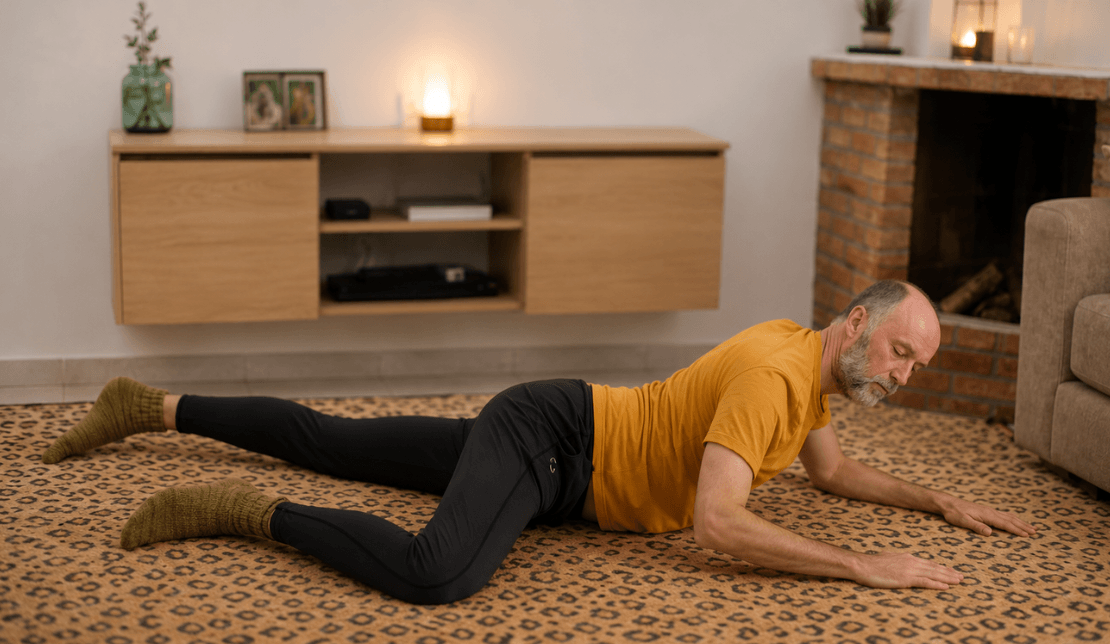
You’ll be offered movement invitations, but how you interpret them – how much you move, how big or small that movement becomes, and how you arrange yourself – remains very much within your domain.
This creates an enormous variety of possibilities. The same invitation can become something dynamic and strong for one person, and more like a delicious, self-directed massage for another. At times, the movement can become so small and subtle that you find yourself at the edges of what you can actually sense as movement – exploring the possibility of movement as much as movement itself.
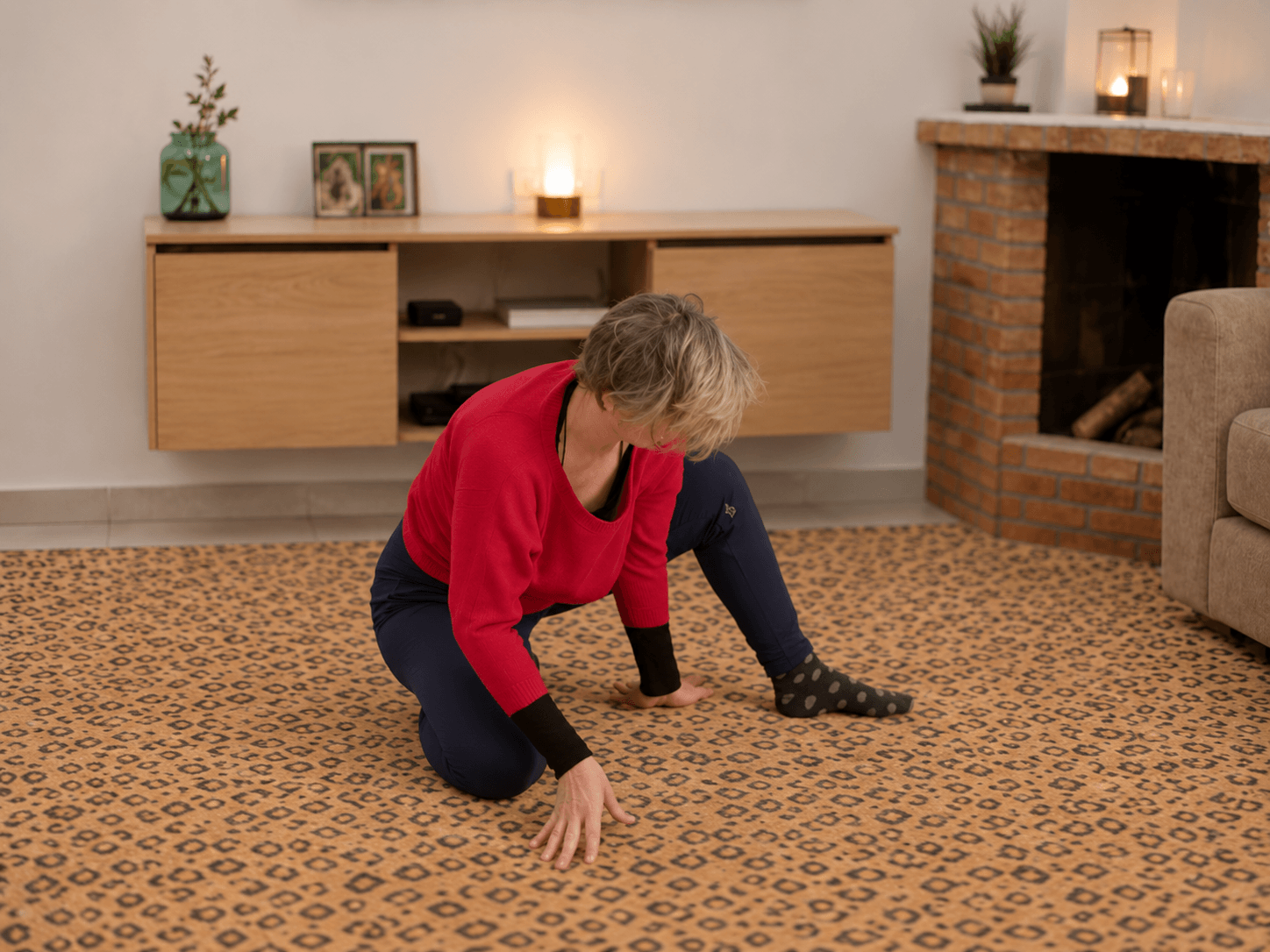
Because you’re not following a fixed choreography, the same class doesn’t have to be the same experience twice. Come back to it another day and something entirely different may capture your interest.
some things are better experienced
We’ve told you what we teach, the intentions, the invitations and the possibilities.
We’ve told you that the same invitation can be completely different depending on the person, the day and what captures your interest.
But there comes a point when there’s not much more we can tell you about Developmental Movement.
You have to move.
Give yourself some floor, some time and a little curiosity – and find out what happens when the movement is yours.
£79
8 online classes · available now · lifetime access
why we keep coming back to Developmental Movement
We first encountered developmental movement as a more defined sequence, but over the years our interest has moved beyond the stages themselves. We’ve become increasingly fascinated by everything that happens within them, between them and on the way from one place to another.
That has influenced the way we teach other practices too. A breathing exploration, meditation or particular somatic movement may begin in a particular position, but how do you get there? If we invite you to lie on your side, bring your feet towards standing or move onto your front, the movement that takes you there doesn’t have to be incidental. It can be part of the exploration.
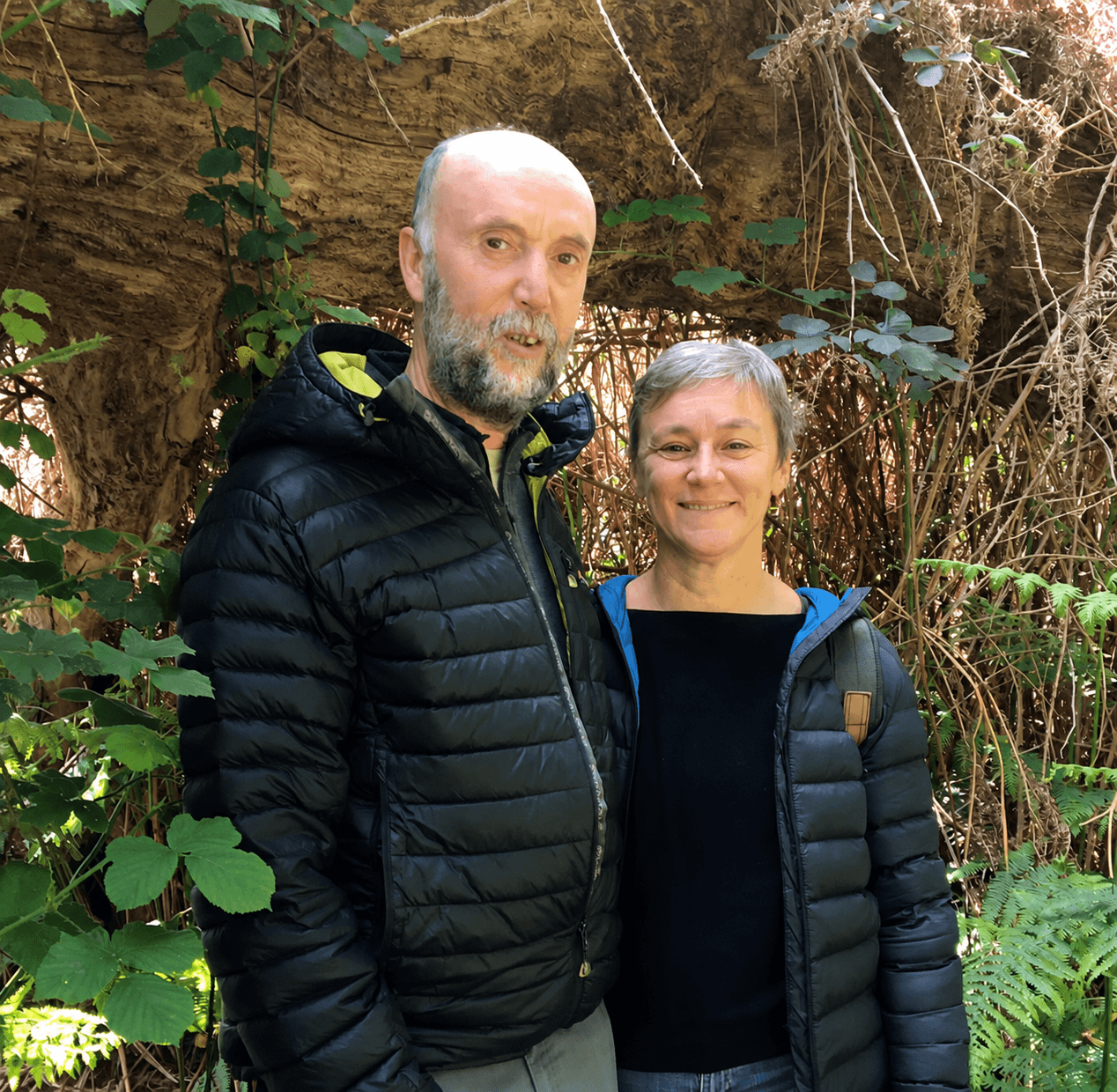
We’ve noticed how easily transitions can disappear from awareness – both in classes we’ve attended and in our own teaching. Attention goes to the movement or position we’re heading towards, while the way we get there is simply something to get through.
Developmental Movement turns that around. The getting there is the exploration. The transitions, the choices, the changes of direction, the moments when you don’t quite know what comes next – none of these are gaps between the important bits. They’re where much of our interest lies.
Perhaps that’s why we keep coming back to it ourselves. There is always another way to move, another possibility to notice, another transition that we’ve never experienced quite like that before.
Frequently Asked Questions
Do I need any previous experience of yoga or somatics?
No. You don’t need any previous experience of yoga, somatics or developmental movement. The classes are guided through invitations to notice, explore and move in ways that make sense for you.
Do I need to copy Amanda or David on screen?
No. What you see on screen is one person’s response to an invitation, not something you need to reproduce.
You might move in a similar way, do something quite different, make the movement much smaller, pause or simply spend some time noticing. How you interpret the guidance is part of the exploration.
Do I need to be able to get down to and up from the floor?
Much of Developmental Movement takes place on the floor, and your relationship with the floor is an important part of the course. You’ll need to be comfortable spending time there and finding ways of moving between different positions.
There is no particular way you need to get down or back up. How you make those transitions is part of the exploration itself, and you can use cushions, blankets, furniture or other support where that makes sense for you.
What do I need for the class?
You’ll need enough floor space to move around comfortably. A carpet, rug or mat can be useful, along with blankets or cushions for additional support.
Some classes also move between the floor and standing, so having a chair or other sturdy support nearby may be useful.
Comfortable clothes that allow you to move freely are all you need to wear.
How long are the classes?
The eight classes are each around an hour long, ranging from just under 55 minutes to 1 hour 3 minutes.
Do I need to take the classes in a particular order?
No. You can begin with the first class and work through them in order, but you don’t have to.
Each class approaches Developmental Movement from a different direction, so you can also choose whichever one captures your interest and return to any of them as often as you like.
How do I access the classes, and how long will I have access?
After purchasing, you’ll receive an email with details of how to access your course in our online course area. You can begin straight away and explore the classes at your own pace.
You’ll have lifetime access, so you can return to the classes whenever you’d like.
Developmental Movement
£79
8 online classes · available now · lifetime access