
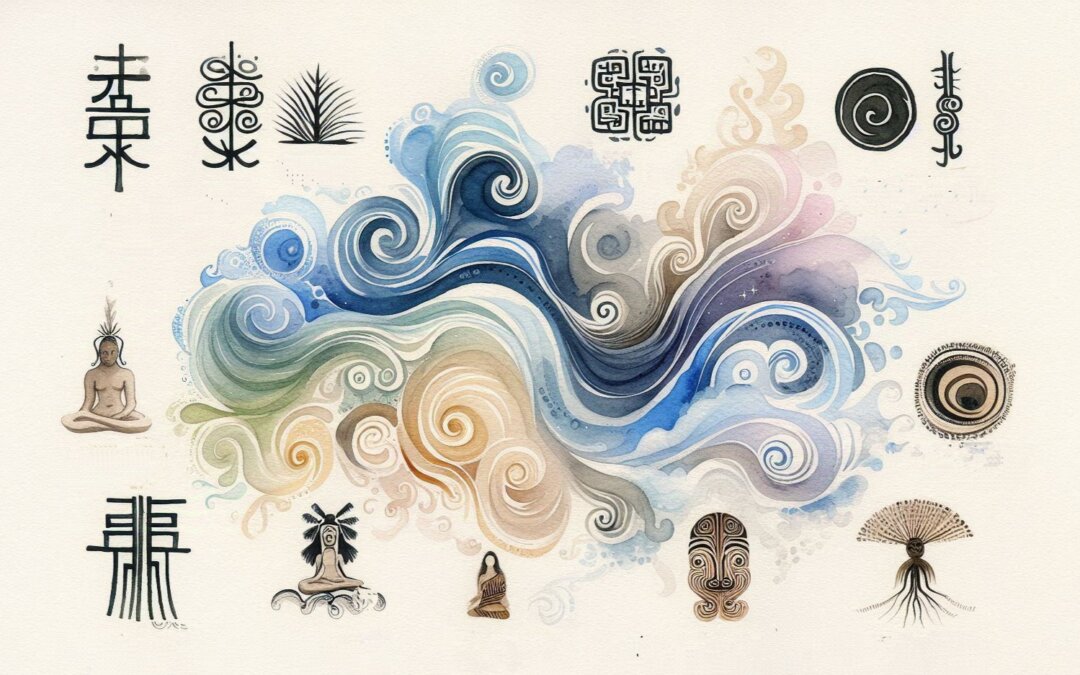
In my journey through the breath’s significance across various traditions, in a previous blog I uncovered how this simple yet profound act is much more than a physiological necessity. It’s a bridge to the divine, a tool for transformation, and a source of spiritual connection. From the ancient lands of Egypt and the Tibetan mountains to the mystic paths of Sufism and the balanced energies of Taoism, the breath has always been revered. As we continue this exploration, let’s delve into the practices of ancient and modern Greeks, Jews, Lakota Sioux, Bushmen of the Kalahari, Japanese and Māori, as well as the spiritual traditions of the Toltec people of Mesoamerica.
Greece: Pneuma—The Breath of Life
In ancient Greek philosophy, pneuma (πνεῦμα) referred to the vital breath or spirit, a concept deeply intertwined with the soul and life itself. The Greeks believed that pneuma was the divine spark that animated living beings, connecting the physical body with the soul. In medical traditions, pneuma was considered the vital force circulating through the body, essential for life and health. Philosophers like the Stoics further expanded on this idea, viewing pneuma as a universal spirit that permeates everything, binding the cosmos together. Breathing practices in Greek culture were thus seen as a way to align oneself with this universal spirit, fostering both physical vitality and spiritual harmony.
Israel: Ruach—The Breath of God
In Hebrew tradition, ruach (ר֫וּחַ) is the word for breath, wind, and spirit, embodying the divine presence that sustains life. The Bible often refers to ruach as the breath of God, a life-giving force that animates all living beings. This concept underscores the belief that breath is not merely a physical function but a divine gift that connects humanity to the Creator. In Jewish mysticism, particularly in the Kabbalistic tradition, breath plays a vital role in meditative practices designed to align the practitioner with the divine ruach. Through controlled conscious breathing and contemplation, individuals seek to purify their spirit, achieve spiritual clarity, and draw closer to the divine presence.
Lakota Sioux: Neyatoneyah—The Breath of Sacred Connection
For the Lakota Sioux, breath, known as neyatoneyah, is a sacred force that connects all living things. In their worldview, breath is seen as the essence of life, a direct link to the Great Spirit (Wakan Tanka). The Lakota believe that through conscious breathing, one can maintain harmony with nature and the spiritual world. Breathwork is often integrated into rituals, prayer, and healing practices, where the breath is used to invoke spiritual power, cleanse the soul, and foster a deeper connection with the Earth and all its inhabitants. The hanblecheyapi (vision quest) and inipi (sweat lodge) are examples of sacred rituals where breath is central to the experience, guiding participants to spiritual insights and purification.
Bushmen of the Kalahari: Num—The Spiritual Energy
Among the Bushmen of the Kalahari, num is a potent spiritual energy that is activated through intense, rhythmic breathing as they engage in trance dances. These dances are a central part of the Bushmen’s spiritual lif. They believe that num resides within the body and that it can be awakened through the use of specific breathing techniques. Once activated, num is thought to rise up the spine, enabling healers and participants to enter altered states of consciousness, communicate with the spirit world, and perform healing rituals. This practice highlights how breath is seen as a gateway to spiritual power, facilitating a direct connection with the divine and the natural world.
Japan: Kokyu—Breathing as Balance and Harmony
In Japanese culture, kokyu (呼吸) is not merely about the physical act of breathing; it represents the harmonious balance between inhalation and exhalation, reflecting the flow of life energy, or ki (気). This concept is integral to practices such as Zen meditation (zazen) and martial arts, where breath control is essential for achieving a state of calm, focus, and inner strength. In zazen, practitioners focus on deep, rhythmic breathing to quiet the mind and connect with the present moment, cultivating a state of clarity and peace. In martial arts like Aikido, kokyu is central to techniques that harmonise breath with movement, enhancing the flow of energy and aligning the body with the mind. This balance and control of breath is seen as a way to connect with the universal life force, promoting both physical and spiritual well-being.
Māori (New Zealand): Ha—The Breath of Life
In Māori culture, ha is the breath of life, a sacred force that connects individuals with the spiritual realm and their ancestors. The sharing of breath through the hongi, a traditional Māori greeting, is a powerful ritual that symbolises the exchange of life force between individuals. This act is more than just a greeting; it is a spiritual connection that binds people together, acknowledging their shared existence and the divine energy that sustains them. In many Māori ceremonies, breath is invoked in karakia (prayers) to call upon spiritual guidance, protection, and the presence of the ancestors. The concept of ha underscores the belief that breath is not just a physical necessity but a vital link to the spiritual world, essential for maintaining harmony and well-being.
Toltec: Breath as a Tool for Transformation
In Toltec tradition, breath is viewed as a powerful tool for personal transformation and spiritual growth. The Toltecs, an ancient Mesoamerican culture, believed that through conscious breathing, individuals could alter their perception, connect with higher consciousness, and release limiting beliefs. Breathing techniques were used in rituals and meditation to clear the mind, balance the emotions, and align with the energy of the universe. The Toltecs saw breath as a means to transcend ordinary reality, entering a state of heightened awareness where one could access deeper wisdom and insight. Through practices like recapitulation, which involves revisiting past experiences while focusing on breath, practitioners could release emotional blockages and reclaim their personal power, paving the way for spiritual evolution.
A Universal Connection Through Breath
As we explore these diverse cultural practices, a common thread emerges: breath is a universal connector, linking the physical and spiritual realms across time and cultures. Whether through the Greek concept of pneuma, the Hebrew ruach, the Lakota neyatoneyah, the Kalahari Bushmen’s num, the Japanese kokyu, the Māori ha, or the Toltec breathwork, the act of conscious breathing transcends its biological function, becoming a profound tool for transformation and spiritual connection.
These traditions remind us that breath is more than just air; it is life, spirit, and a gateway to deeper understanding. By consciously engaging with our breath, we can access a source of inner wisdom and strength that not only sustains us but also connects us to something greater. As we focus on breathing with awareness, we honour these ancient practices, bringing their timeless wisdom into our modern lives, and deepening our connection with the world around us.
Interested in Exploring Conscious Breathing for yourself
We have a variety of Somatic Breathing courses available to help you in your explorations and to get you started we have our free SomaBreathe Taster courses designed to assist you in developing your abilities to embody your own conscious breath. This free course is accessible by cicking on the image below.

Recent Comments