

The Dance of the Felt Sense: A Somatic Approach to Movement & Spiritual Connection
Dance is more than a performance; it’s a way of living, feeling, and connecting with the essence of who we are. Across cultures and traditions, dance has been a medium for meditation, prayer, and spiritual expression. In these traditions, the dance is not merely about external form or appearance but about the deep, inner experience of movement—the felt sense of being alive, present, and connected.
SomaDance is a somatic approach to dance that focuses on the feeling of a movement rather than how it looks. This approach invites us to move from within, guided by our internal sensations and impulses rather than external expectations or aesthetic ideals. It’s about embodying the dance, feeling it from the inside out, and allowing the movement to arise naturally from the body’s wisdom.
Somatics, as a discipline, is concerned with the lived experience of the body. It emphasises the importance of listening to the body’s signals and honouring its natural rhythms and impulses. When applied to dance, this means shifting our focus from achieving a perfect pose or sequence to exploring the quality of our movement—how it feels to move, the sensations that arise, and the emotions that are expressed through our bodies.
Through SomaDance, our ‘felt sense’ of our body becomes the primary teacher. We learn to trust our body’s intelligence, allowing it to guide us in ways that are often surprising, spontaneous, and deeply healing. This way of dancing is inherently meditative, as it requires us to be fully present with our body and its sensations, letting go of any preconceived notions of what the dance should look like.
Centring and Presencing in SomaDance
Centring and presencing are core elements of SomaDance. Centring refers to the practice of grounding ourselves in our bodies, finding our centre of gravity, and moving from a place of stability and balance. This practice helps us to feel more connected to our bodies and more attuned to the subtle shifts in our energy and awareness as we move.
Presencing, on the other hand, involves being fully present in the moment, with an open and receptive awareness of our body, mind, and surroundings. It’s about tuning in to the here and now, allowing ourselves to be fully immersed in the experience of movement without judgment or expectation. When we are fully present in our dance, we enter a state of flow where time seems to dissolve, and we become one with the movement.
Together, centring and presencing create a powerful foundation for SomaDance. By grounding ourselves in our bodies and being fully present in each moment, we can access a deeper level of awareness and connection in our movement. This allows us to move with greater ease, grace, and authenticity, and to experience the dance as a form of embodied meditation.
Dance as Meditation: Embodied Mindfulness
Dance has a long history as a form of meditation. In many traditions, dance is used as a way to quiet the mind and enter a state of deep, embodied awareness. This form of meditation is not about emptying the mind of thoughts but about filling the mind with the sensations and rhythms of the body, allowing the movement to become a focus for mindfulness.
In practices like Sufi whirling and Tai Chi, dance-like movements are used to achieve a meditative state. These practices involve simple, repetitive movements that allow the mind to quiet and the dancer to become fully present in the moment. The focus is on the physical sensations of the movement, the rhythm of the breath, and the flow of energy through the body.
Sacred Dance: Movement as Prayer
In many cultures, dance is more than just a form of artistic expression; it is a sacred practice, a form of prayer, and a way to communicate with the divine. Sacred dance is often performed as an offering to the gods, embodying spiritual narratives and invoking a sense of connection with the spiritual realm.
In Hinduism, for example, classical dance forms like Bharatanatyam are considered offerings to the gods. These dances are highly ritualised, with each movement and gesture carrying deep symbolic meaning. The dancer becomes a vessel for the divine, expressing spiritual stories and emotions through intricate movements.
Similarly, in Native American traditions, dance is an integral part of spiritual rituals, such as the Sun Dance or Ghost Dance. These dances are performed as a way to connect with the spiritual world, invoking healing, guidance, and protection. The movement is not just an expression of the dancer’s emotions but a communication with the spirits or gods.
Ecstatic Dance: Spiritual Liberation Through Movement
Ecstatic dance is a form of dance where participants are encouraged to move freely, without judgment or inhibition, expressing their inner emotions and connecting with their spiritual essence. This form of dance is often seen as a form of spiritual liberation, where the boundaries of the self dissolve, and the dancer experiences a sense of unity with the universe.
In Sufi practices, such as the whirling dervishes, ecstatic dance is used as a way to achieve a state of spiritual ecstasy and union with the divine. The repetitive, spinning movements induce a trance-like state, where the dancer loses a sense of individual identity and merges with the divine presence.
Similarly, in shamanic traditions, ecstatic dance is used to enter altered states of consciousness and connect with the spiritual realm. The dance becomes a journey, a way to explore the inner landscapes of the soul and communicate with spirits or ancestors.
Trance Dance: Entering the Spiritual Realm
Trance dance is another form of dance that is used to enter altered states of consciousness and connect with the spiritual realm. In many African and Caribbean traditions, rhythm and dance are used to induce trance states, allowing participants to communicate with ancestors, spirits, or deities.
In shamanic practices, trance dance is often used as a way to facilitate spiritual journeys and healing. The dancer enters a trance state, where they can access hidden realms of consciousness and receive guidance or healing from the spiritual world.
Dance as a Medium for Spiritual Connection
Dance has been a profound medium for spiritual connection throughout history. Whether as a form of meditation, prayer, or ecstatic expression, dance allows individuals and communities to explore and deepen their spiritual experiences.
While SomaDance is not specifically the same as Sacred Dance, Trance Dance or Ecstatic Dance, it does however, enhance a spiritual connection by focusing on the felt sense of movement—the internal sensations, emotions, and impulses that arise as we move.
Embodying the Dance of Life
SomaDance is a reminder that the true beauty of dance lies not in how it looks, but in how it feels. It’s an invitation to move beyond external aesthetics and explore the deeper, internal experience of movement. By centring ourselves in our bodies and being fully present in each moment, we can access a deeper level of awareness, connection, and spiritual fulfilment.
Dance, in this sense, becomes a metaphor for life itself—a journey of continuous movement, where the focus is not on reaching a destination but on fully embodying the experience. Whether we are dancing in a ritual, a meditation, or simply for the joy of it, a somatic approach invites us to dance with our whole being, moving from the inside out, and experiencing the dance of life in all its richness and depth.
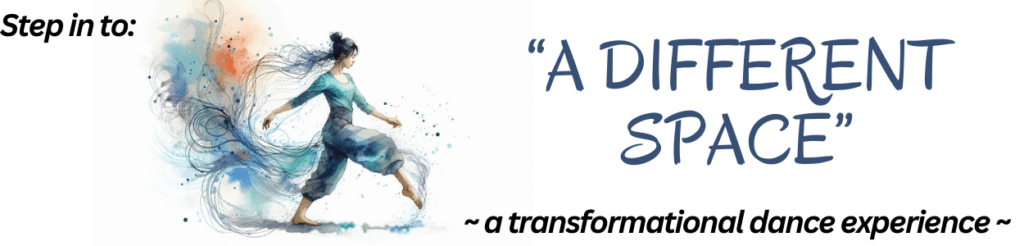
Click the image below if you’d like to
Recent Comments